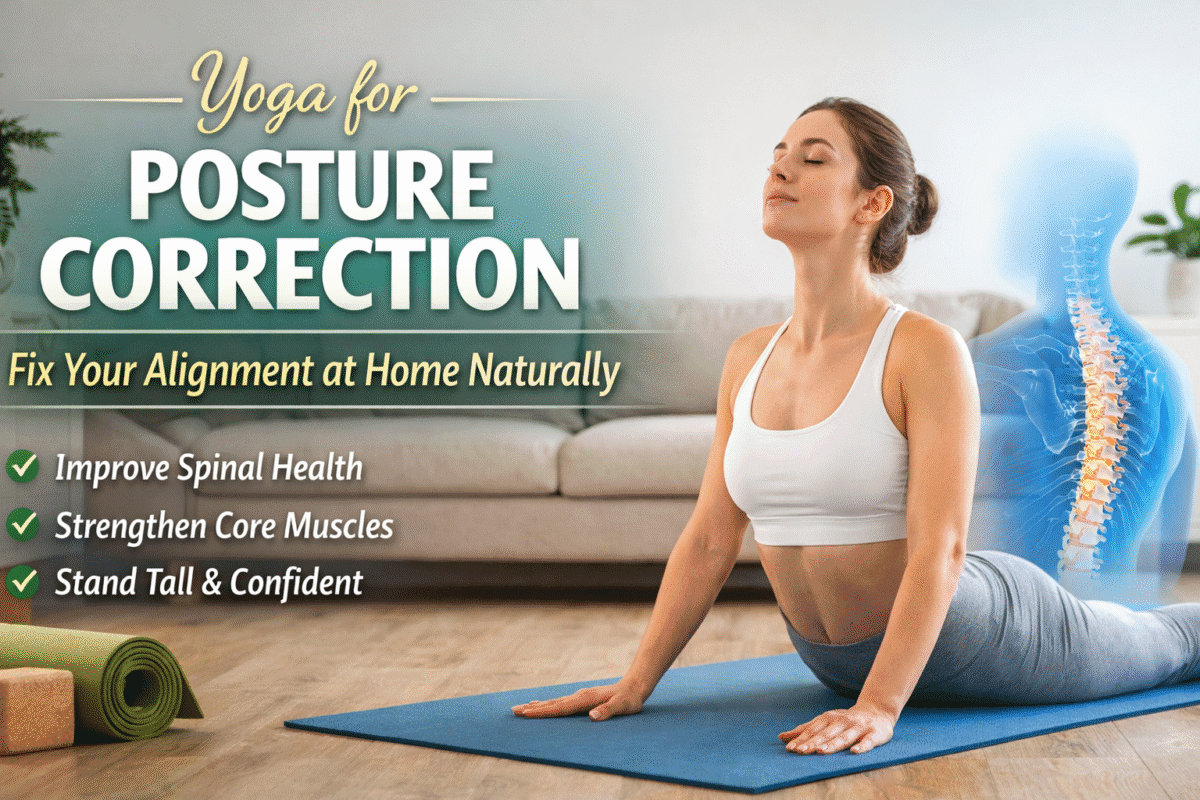
Poor posture is more than just a cosmetic issue, it can lead to neck pain, back pain, and decreased energy levels. The good news? Yoga for posture correction strengthens your spine, stretches tight muscles, and improves body awareness. This guide shows you step-by-step poses, routines, and desk exercises to fix your posture naturally at home.
Why Posture Matters More Than You Think
Posture is not just about standing straight. It’s about how your body holds itself during every activity sitting, walking, sleeping, and even breathing. When posture is off, certain muscles become overactive while others weaken, creating long-term imbalance.
Common posture problems include:
- Rounded shoulders
- Forward head posture
- Excessive lower-back arch
- Hunched upper back
- Collapsed chest
Left uncorrected, these imbalances can contribute to neck stiffness, shoulder tension, spinal compression, and recurring discomfort. Many people turn to quick fixes, but true alignment requires consistent, mindful movement; this is where posture correction yoga exercises excel. For targeted relief, explore Yoga for Back Pain.
How Yoga Helps With Posture Correction
Yoga doesn’t force your body into alignment; it teaches it gently and progressively.
1. Strengthens Postural Support Muscles – Builds strength in the core, spinal muscles, glutes, and shoulders, essential for upright posture.
2. Improves Spinal Mobility – Yoga restores natural movement and alignment in stiff spines.
3. Releases Tight Areas – Yoga gradually releases tight hips, hamstrings, and chest muscles.
4.Trains Mindful Alignment – Yoga increases awareness so you naturally correct posture while sitting, standing, or walking.
This holistic approach is why yoga and posture correction work so effectively together. Through back posture correction yoga, you can address both symptoms and root causes of poor posture.
12 Best Yoga Poses for Posture Correction
Practicing the right yoga poses regularly can help realign the spine, strengthen weak muscles, and release tight areas. These posture yoga at home poses are effective, beginner-friendly, and suitable for home practice:
1. Mountain Pose (Tadasana)
2. Cobra Pose (Bhujangasana)
3. Fish Pose (Matsyasana)
4. Camel Pose (Ustrasana)
5. Bridge Pose (Setu Bandhasana)
6. Thread the Needle (Parsva Balasana)
7. Plank Pose (Phalakasana)
8. Side Plank (Vasisthasana)
9. Cat–Cow Pose (Marjaryasana–Bitilasana)
10. Downward-Facing Dog (Adho Mukha Svanasana)
11. Warrior I (Virabhadrasana I)
12. Child’s Pose (Balasana)
Yoga Poses for Forward Head Posture & Neck Tension
Forward head posture, often caused by prolonged phone or computer use, can create tight neck muscles and a weak upper back. The following yoga poses help realign the neck, release tension, and restore proper head-over-shoulders posture.
1. Mountain Pose (Tadasana)
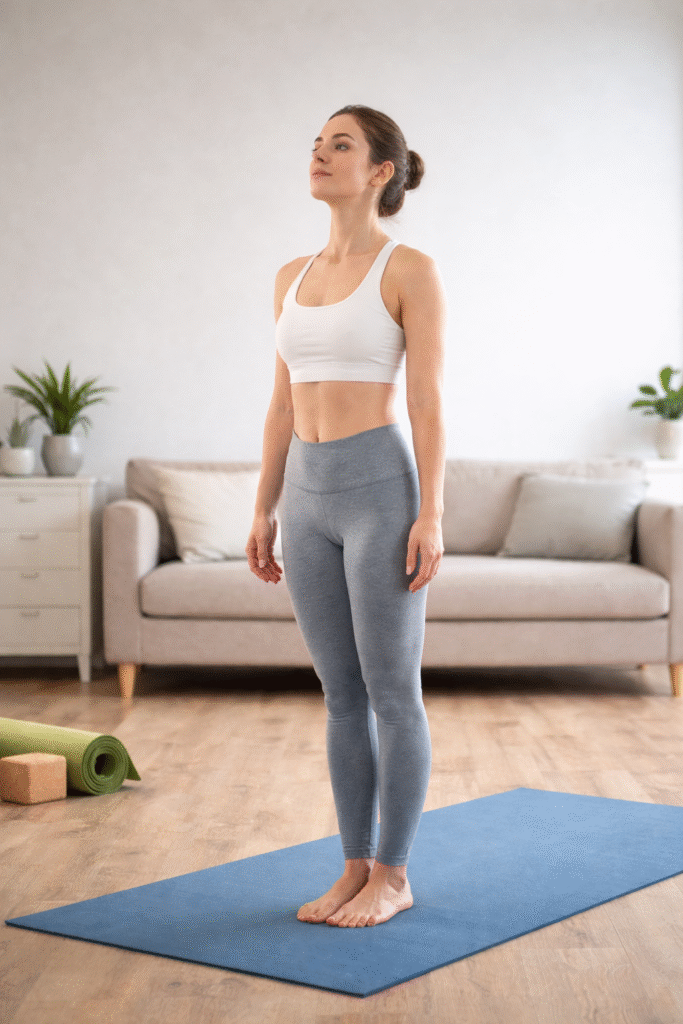
Mountain Pose is a foundational posture that teaches proper alignment and body awareness.
Best for: Neck alignment & posture awareness
How to practice:
- Stand with feet hip-width apart and parallel
- Distribute your weight evenly
- Engage your thighs without locking knees
- Tuck the tailbone slightly
- Lengthen spine upward
- Roll shoulders back and down, arms naturally at sides
- Gently tuck chin to lengthen back of neck
- Focus on stacking ears over shoulders, shoulders over hips, hips over ankles
Breathing:
- Inhale to lengthen the spine
- Exhale, grounding through the feet and releasing neck tension
Modifications:
- Stand with your back against a wall for alignment
- Place a block between the thighs to activate inner leg muscles
2. Cobra Pose (Bhujangasana)
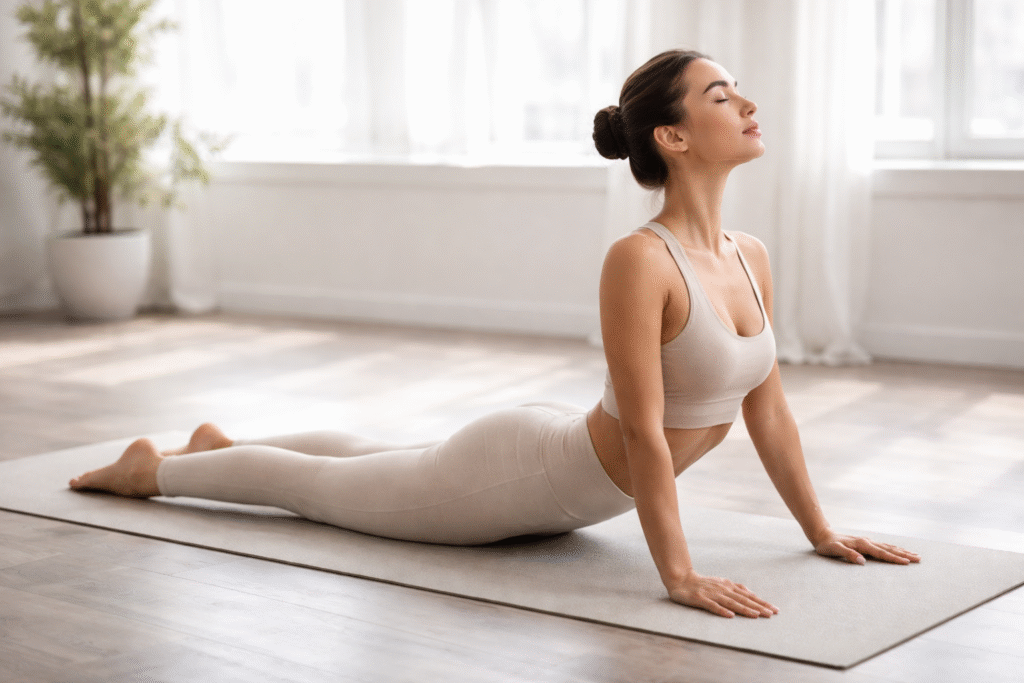
Cobra Pose strengthens the upper back, opens the chest, and counteracts forward slouching.
Best for: Slouching & weak upper back
How to practice:
- Lie face down, legs extended, tops of feet pressing into mat
- Palms under shoulders, elbows close
- Engage legs, press thighs and tops of feet
- Inhale and lift chest using back muscles
- Slight bend in elbows, shoulder blades together
- Neck neutral
Breathing:
- Inhale lifting chest, exhale maintaining engagement
Modifications:
- Baby Cobra; folded blanket under pelvis
3. Fish Pose (Matsyasana)
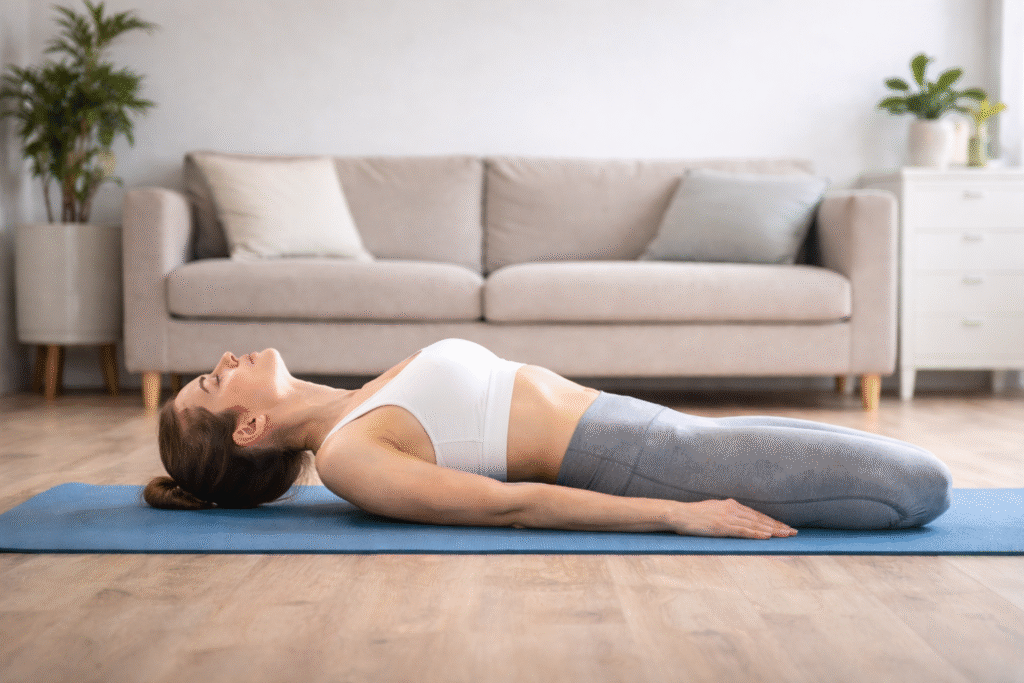
Best for: Tech neck & tight chest
Fish Pose stretches tight chest and neck muscles, helping to counter forward head posture.
How to practice:
- Lie on your back, legs extended, arms alongside body
- Slide hands under your hips, palms pressing into the floor
- Press into elbows and forearms to lift the chest
- Arch the upper back, lifting the sternum
- Lower the crown of the head lightly to the floor for a gentle backbend
- Keep legs active and grounded
Breathing:
- Inhale to lift chest and expand ribs
- Exhale, keeping throat and neck relaxed
Modifications:
- Use a block or bolster under the upper back and head
- Bend knees with feet on the floor if lower back feels tight
For Rounded Shoulders & Upper Back Weakness
These poses strengthen the back and open the chest.
4. Camel Pose (Ustrasana)
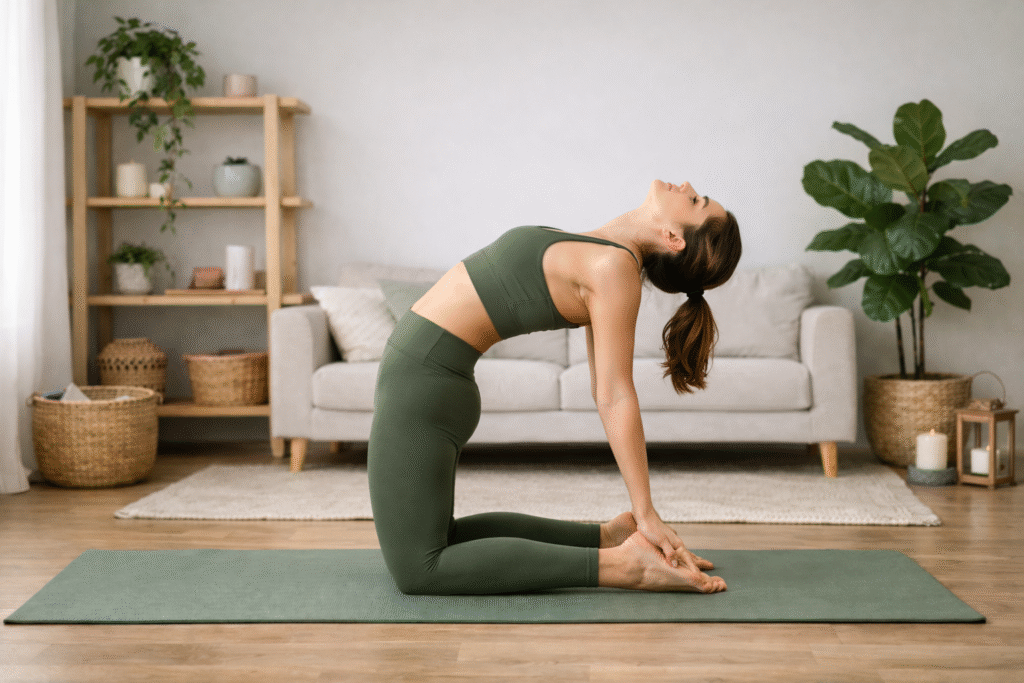
Camel Pose stretches the front body while activating back muscles essential for posture.
Best for: Deep chest opening & spinal strength
How to practice:
- Kneel with knees hip-width apart, tops of feet flat
- Place hands on lower back for support
- Press hips forward and lift the chest
- Slowly lean back while keeping spine long
- Optionally reach hands to heels if flexibility allows
- Let head gently drop back if neck is comfortable, otherwise keep chin slightly tucked
Breathing:
- Inhale to lift the chest
- Exhale while engaging core for stability
Modifications:
- Place blocks beside heels for easier reach
- Keep hands on hips if new to backbends
5. Bridge Pose (Setu Bandhasana)
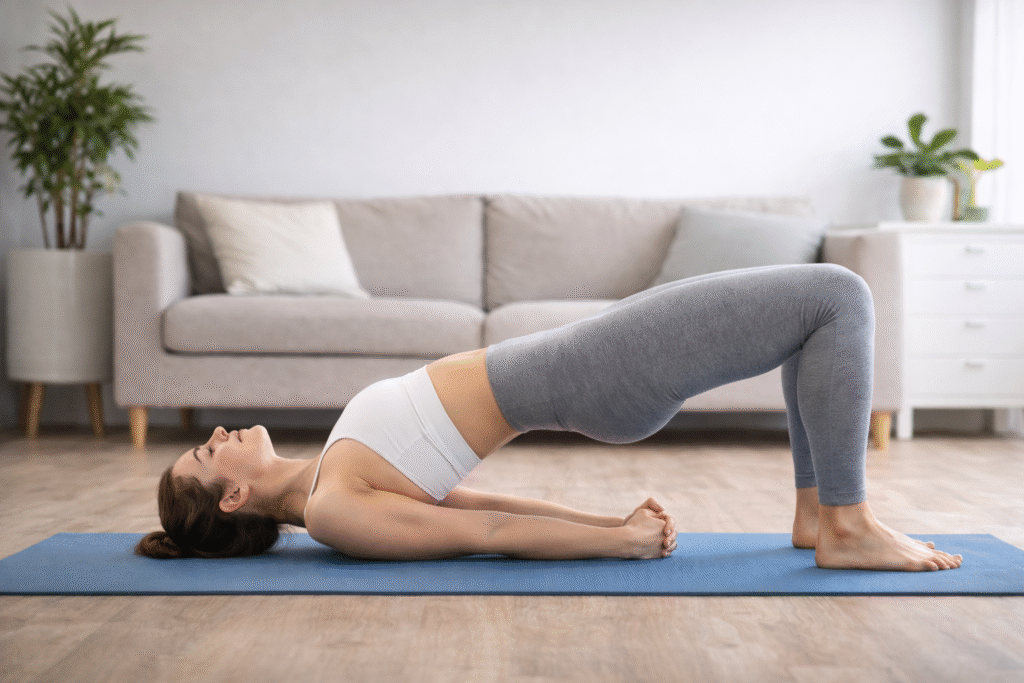
Best for: Glute & spinal strength
Bridge Pose strengthens the glutes and back while opening the chest and hip flexors.
How to practice:
- Lie on your back, knees bent, feet hip-width apart
- Arms by your sides, palms down
- Inhale and press through heels to lift hips
- Roll shoulders under, interlace fingers if possible
- Lift chest toward chin, keeping neck long
- Engage glutes and thighs, avoid lower-back strain
Modifications:
- Place block under sacrum for support
- Use strap around thighs to maintain alignment
6. Thread the Needle (Parsva Balasana)
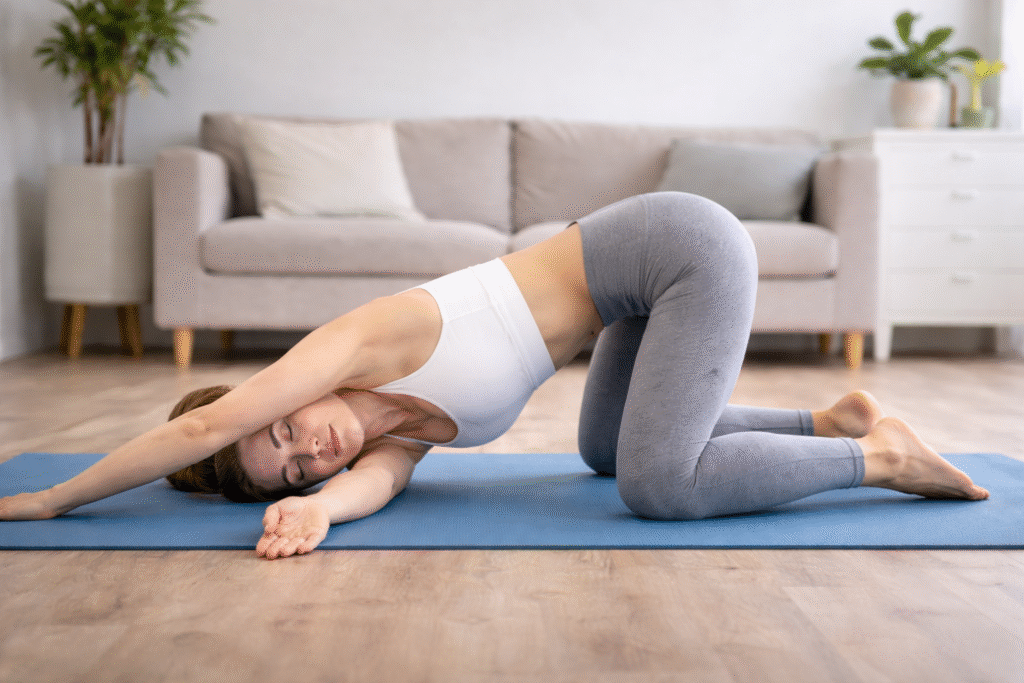
Best for: Upper-back tension & thoracic mobility
How to practice:
- Start in tabletop position (shoulders over wrists, hips over knees)
- Inhale, reach right arm up
- Exhale, thread right arm under left arm, lowering right shoulder and ear to the mat
- Keep hips stacked over knees
Breathing:
- Inhale to create space in the upper back
- Exhale to release tension
Modifications:
- Use blanket under shoulder or head for support
- Twist only as far as comfortable
For Core Strength & Spinal Stability
A strong core is essential for maintaining upright posture, supporting the spine, and preventing slouching. These poses target your core muscles, spinal stabilizers, and overall posture alignment.
7. Plank Pose (Phalakasana)
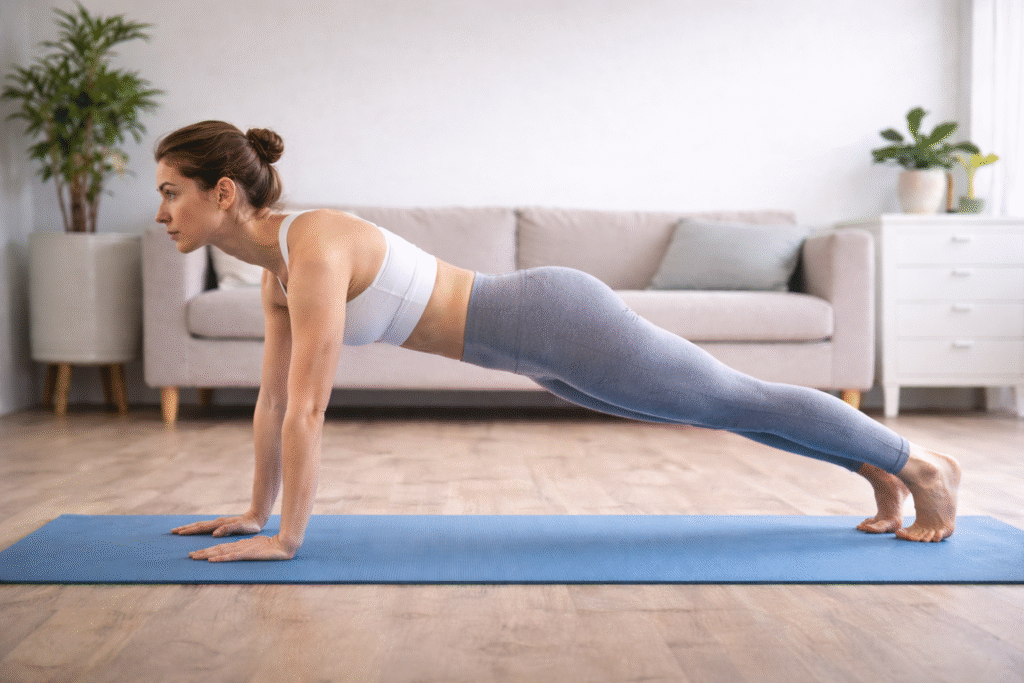
Best for: Core strength and full-body posture
How to practice:
- Start on all fours, then step your feet back one at a time to form a straight line from head to heels.
- Align shoulders directly over wrists; spread fingers wide for a strong base.
- Engage your core, thighs, and glutes to maintain a long, neutral spine.
- Keep your neck in line with your spine; gaze slightly forward and down.
- Avoid sagging your hips or rounding your upper back.
Breathing:
- Inhale to lengthen through the crown of your head.
- Exhale to draw the belly in and stabilize the posture.
Modifications:
- Drop your knees to the mat while keeping a straight line from head to knees.
- Hold for 20–30 seconds initially and gradually build endurance.
Posture benefits:
- Strengthens deep core muscles
- Supports upright spine
- Improves overall posture stability
8. Side Plank (Vasisthasana)
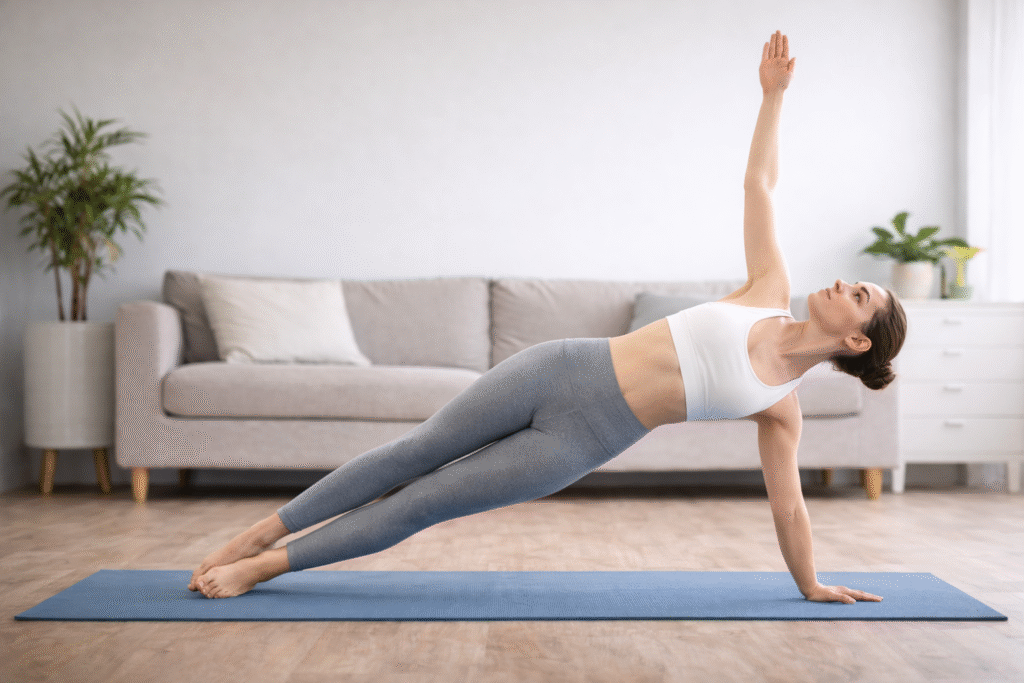
Best for: Obliques, hips, and spinal stabilizers
How to practice:
- From the plank, shift your weight to your right hand and roll onto the outer edge of your right foot.
- Stack your left foot on top of the right (or stagger for balance).
- Lift your left arm toward the ceiling, keeping shoulders stacked.
- Engage glutes and press your hips upward to keep the body in a straight line.
Breathing:
- Inhale to find lift and length.
- Exhale to engage your core and maintain balance.
Modifications:
- Drop the bottom knee to the floor for extra support.
- Practice near a wall for additional alignment support.
Posture benefits:
- Strengthens obliques and spine stabilizers
- Improves balance and lateral core support
- Helps correct rounded posture
9. Cat–Cow Pose (Marjaryasana–Bitilasana)
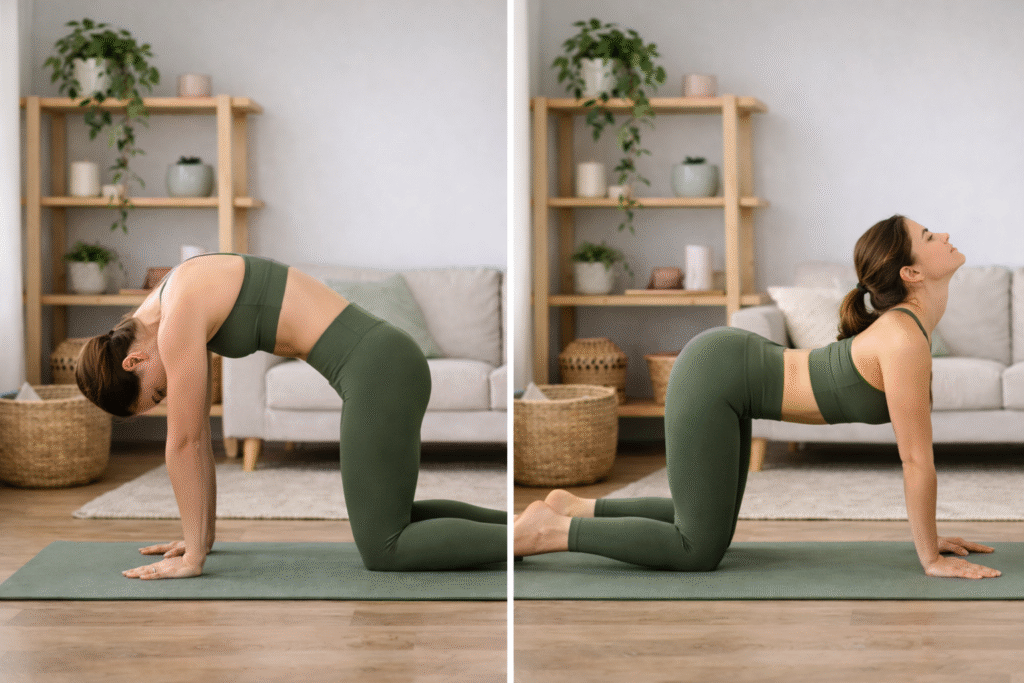
Best for: Dynamic spinal mobility and posture awareness
How to practice:
- Begin on all fours with wrists under shoulders and knees under hips.
- Cow (Inhale): Drop your belly, lift chest and tailbone toward the ceiling. Gaze forward.
- Cat (Exhale): Round your back, tuck your chin, draw belly in.
- Flow slowly between the two poses for 5–10 rounds.
Breathing:
- Inhale for Cow (spinal extension).
- Exhale for Cat (spinal flexion).
Modifications:
- Place a folded blanket under your knees for cushioning.
- Move gently if the spine is stiff.
Posture benefits:
- Encourages spinal flexibility
- Strengthens coordination between core and back
- Improves posture awareness
For Hip Alignment & Lower Back Health
Tight hips and weak lower back muscles contribute to poor posture. These poses help align the hips, release tension, and support proper spinal positioning.
10. Downward-Facing Dog (Adho Mukha Svanasana)
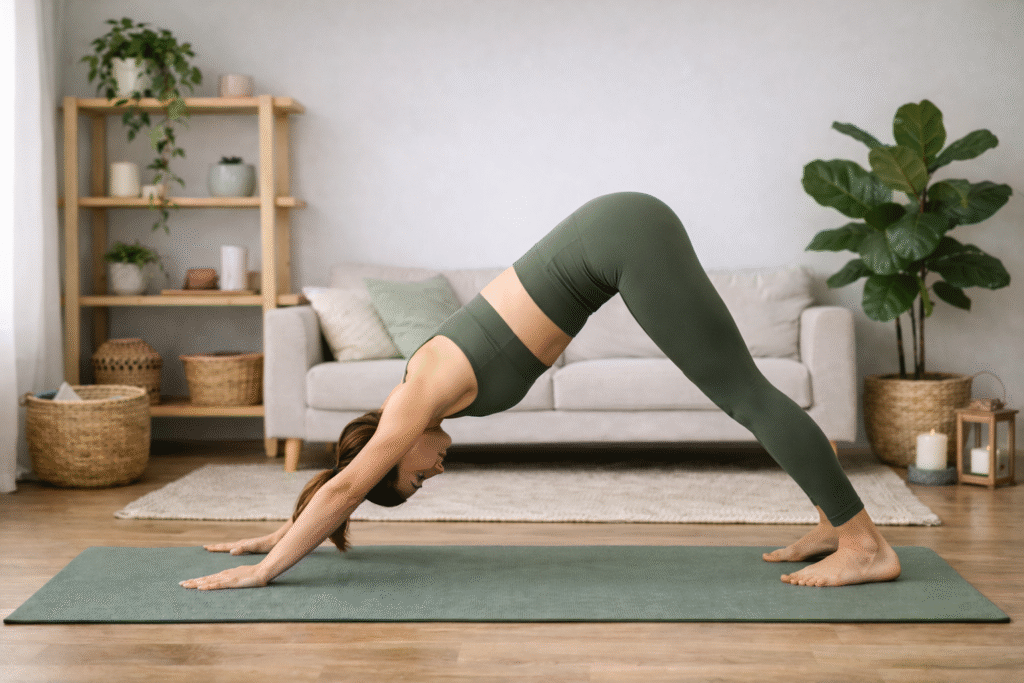
Best for: Full-body stretch and spinal lengthening
How to practice:
- Start on all fours, tuck your toes, and lift your hips toward the ceiling to form an inverted “V”.
- Spread fingers wide, pressing evenly through the hands.
- Keep knees slightly bent if hamstrings are tight, and focus on lengthening the spine.
- Let your head hang naturally between your arms.
Breathing:
- Inhale to lengthen spine
- Exhale to press through the hands and deepen the stretch
Modifications:
- Bend knees generously for tight hamstrings
- Place hands on blocks or a sturdy elevated surface to reduce shoulder strain
Posture benefits:
- Full-body stretch
- Lengthens spine
- Relieves hamstrings and shoulder tension
11. Warrior I (Virabhadrasana I)
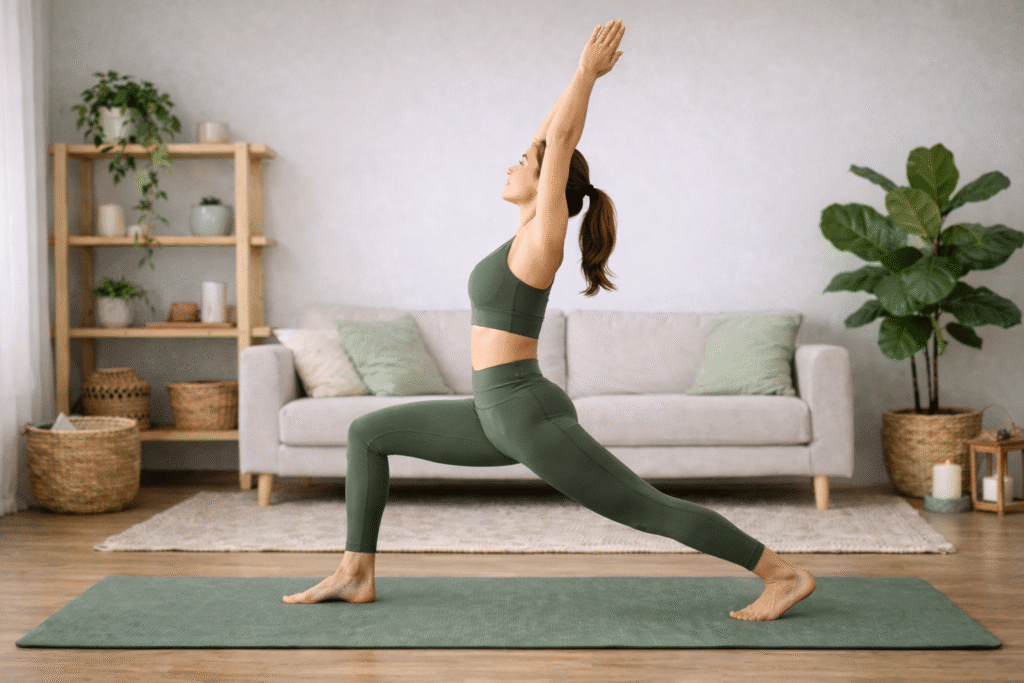
Best for: Hip flexor opening and lower back strengthening
How to practice:
- Stand tall, step left foot back about 3–4 feet.
- Bend right knee to stack over the ankle; keep left leg straight.
- Turn the back foot slightly outward (~45 degrees) and press into its outer edge.
- Square hips forward, raising both arms overhead with shoulders relaxed.
Breathing:
- Inhale to lift spine and arms
- Exhale to deepen lunge and ground through feet
Modifications:
- Shorten stance if balance is challenging
- Hands on hips instead of overhead for alignment focus
Posture benefits:
- Opens hip flexors
- Strengthens legs and lower back
- Supports upright posture
12. Child’s Pose (Balasana)
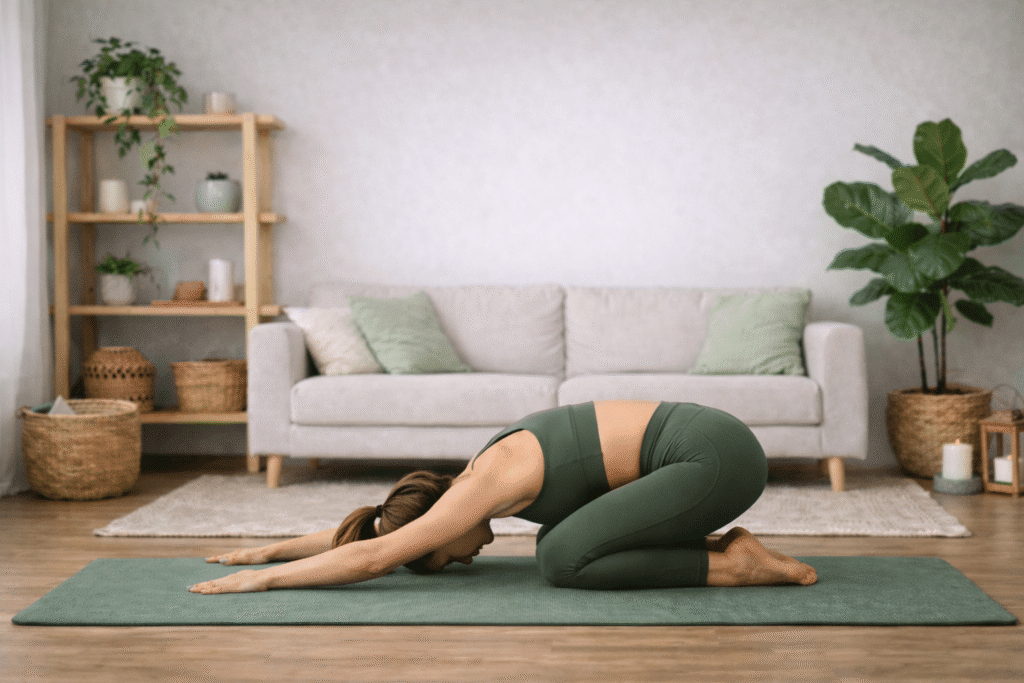
Best for: Restorative posture integration
How to practice:
- Kneel with big toes touching and knees wide or together
- Sit back onto heels, fold forward, extending arms in front or alongside body
- Rest forehead on mat or block, relax shoulders and jaw
Breathing:
- Inhale into back body, expand ribs
- Exhale to release tension
Modifications:
- Place bolster or pillows under torso for support
- Keep knees together if wide-legged version is uncomfortable
Posture benefits:
- Decompresses spine
- Restores alignment after practice
- Integrates posture benefits throughout the body
Yoga Poses for Posture You Can Do at Home
In addition to exercises, these yoga poses for posture are perfect for daily practice:
- Plank Pose: Strengthens the core for better alignment.
- Downward-Facing Dog: Stretches spine and shoulders.
- Seated Forward Bend: Stretches the back and hamstrings.
- Eagle Pose (Garudasana): Strengthens upper back and shoulders.
By combining these posture correction yoga poses with the exercises above, you can create a balanced routine that targets all postural muscles. Try our Online Yoga Classes for guided sessions.
Creating Your Posture-Correcting Yoga Routine
Daily Micro-Routine (5–10 Minutes)
| Pose | Duration |
|---|---|
| Mountain Pose | 1 min |
| Seated Cat-Cow | 1 min |
| Cobra / Chest Opener | 30–60 sec |
| Thread the Needle | 1 min each side |
| Child’s Pose | 2 min |
Full Postural Flow (20–30 Minutes)
| Pose | Duration / Reps |
|---|---|
| Mountain Pose | 1 min |
| Cat-Cow | 1–2 min |
| Plank Pose | 30 sec × 2 |
| Downward Dog | 1 min |
| Cobra Pose | 3–5 reps |
| Warrior I | 30 sec per side |
| Camel Pose | 3–5 breaths |
| Bridge Pose | 3 rounds |
| Thread the Needle | 1 min per side |
| Child’s Pose | 2–3 min |
Want to practice posture yoga anytime, anywhere? Try Online Yoga Classes with Yogain Wellness.
Tips to Correct Your Posture at Home
1. Practice consistently: 15–30 minutes daily can make a big difference.
2. Use a mirror: Check your alignment while performing yoga poses.
3. Engage your core: A strong core supports a healthy spine.
4. Take breaks from sitting: Stand up and stretch every hour.
5. Mind your ergonomics: Adjust chairs, screens, and pillows for better alignment.
Remember, yoga is not just about poses, it’s about mindful alignment and creating habits that last.
The Science Behind Yoga for Posture Correction
Yoga improves posture through a combination of strengthening, stretching, and body awareness:
Muscle Strengthening: Posture yoga exercises strengthen the core, back, and shoulder muscles that keep your spine upright.
Flexibility & Stretching: Tight chest, hip, and neck muscles often pull your spine into a slouched position. Yoga lengthens these muscles.
Mindful Alignment: Awareness during yoga encourages proper posture in daily life.
Spinal Health: Yoga encourages correct spinal curvature, reducing compression and stiffness.
Research Highlights:
- A 2022 study in Journal of Bodywork and Movement Therapies found participants practicing posture-focused yoga for 8 weeks significantly improved spinal alignment and reduced pain.
- Another study in Complementary Therapies in Clinical Practice concluded yoga enhances postural awareness and core strength, crucial for correcting slouched posture.
Get AI-Powered Posture Guidance with Yogain Wellness
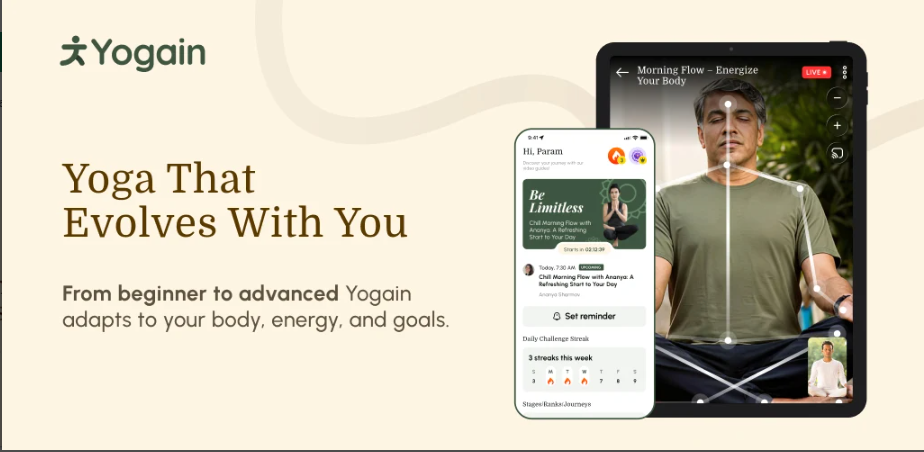
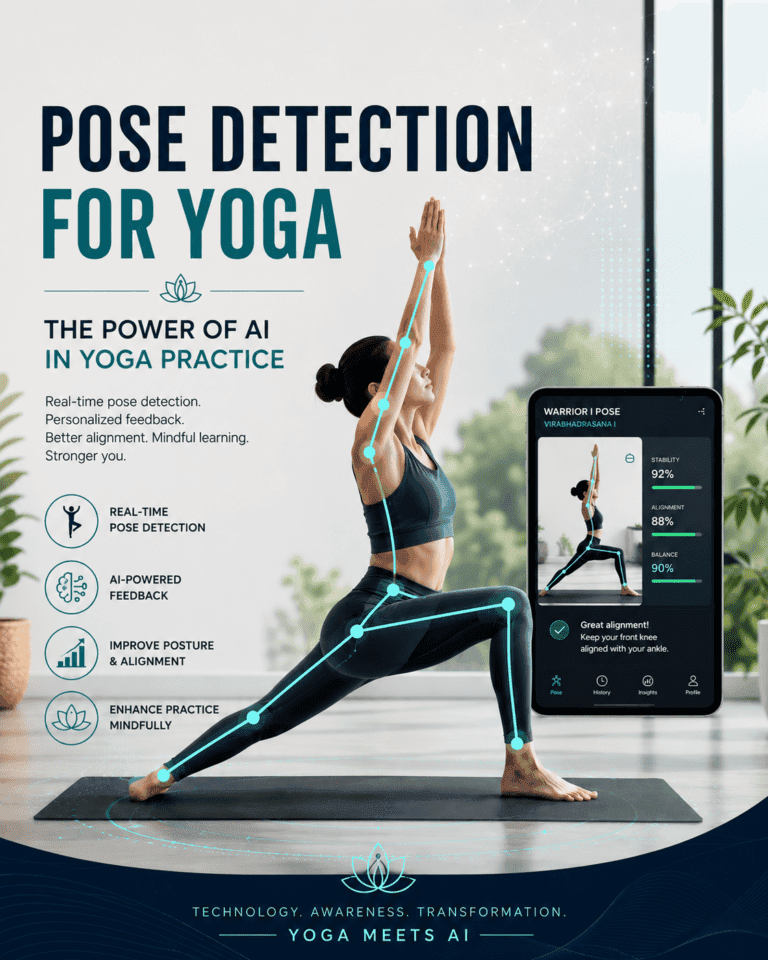
Take your posture correction to the next level with the AI Yoga App from Yogain Wellness. Get:
- Personalized posture routines
- AI-assisted pose correction
- Reminders & tracking to stay consistent
Download the AI Yoga App today and start your journey to better posture, right from home.

Conclusion
Improving your posture doesn’t require expensive equipment or long hours at the gym. With dedicated practice of yoga for posture correction, incorporating back posture correction yoga, posture correction yoga exercises, and yoga poses for posture, you can correct your posture at home, enhance your spine health, and feel taller, stronger, and more confident.
Start today, your spine will thank you tomorrow!
FAQs For Yoga for Posture Correction
Q1: Can yoga really fix poor posture?
Yes! Regular practice strengthens postural muscles, stretches tight areas, and trains your body to maintain correct alignment naturally.
Q2: How long before I see results from posture correction yoga?
With consistent practice, most people notice improvements in 3–6 weeks, depending on initial posture and commitment.
Q3: Do I need any special equipment for yoga for posture correction?
No. A yoga mat is enough. Optional props like blocks or straps can enhance certain poses.
Q4: Can I do these exercises at home?
Absolutely! All the recommended yoga poses for posture and posture correction yoga exercises can be performed at home safely.
Start Your 10-Day Free Trial Today
Your journey back to presence begins with your first breath.