PCOS (Polycystic Ovary Syndrome) is one of the most common hormonal conditions affecting women today. It can lead to symptoms like irregular periods, weight gain, acne, hair fall, and difficulty in managing hormones.
While medical treatment is important, lifestyle changes play a huge role. One of the most effective and natural ways to support your body is through yoga.
In this guide, you’ll learn the best yoga poses for PCOS, how they help your body, and how to practice them correctly, even if you’re a beginner.
Why Yoga is Effective for PCOS
Yoga works on both the physical and hormonal level, which makes it especially useful for managing PCOS symptoms.
How Yoga Helps:
1. Balances Hormones Naturally
Certain yoga poses stimulate endocrine glands (like the thyroid and ovaries), which helps regulate hormone production over time.
2. Reduces Stress and Cortisol Levels
Stress is one of the biggest triggers for PCOS. Yoga activates the relaxation response in your body, reducing cortisol (stress hormone), which directly impacts hormonal balance.
3. Improves Insulin Sensitivity
Many women with PCOS experience insulin resistance. Regular yoga helps improve how your body uses insulin, which can support weight management and reduce symptoms.
4. Boosts Blood Circulation in Pelvic Area
Many PCOS yoga asanas focus on the lower abdomen and pelvis, improving blood flow to reproductive organs.
This is why experts often recommend yoga as a long-term supportive therapy for PCOS management.
Key Takeaways
- Yoga helps manage PCOS but requires consistency (not quick fixes)
- Focus on poses that activate the abdomen and pelvic region
- Combine breathing + movement for better results
- Practice at least 15–30 minutes daily
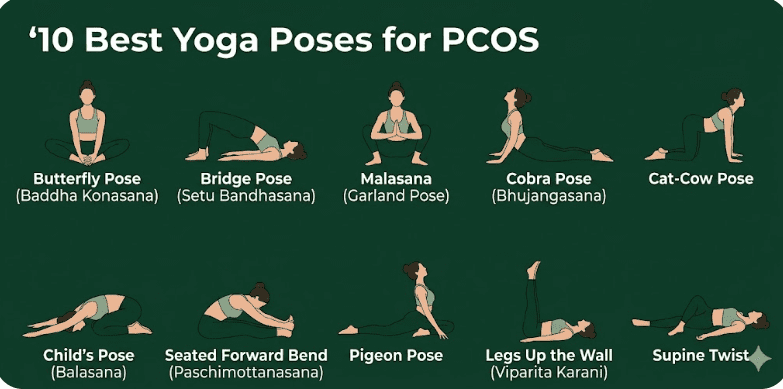
10 Best Yoga Poses for PCOS
Below are the most effective PCOS yoga asanas you can include in your daily routine:
1. Butterfly Pose (Baddha Konasana)
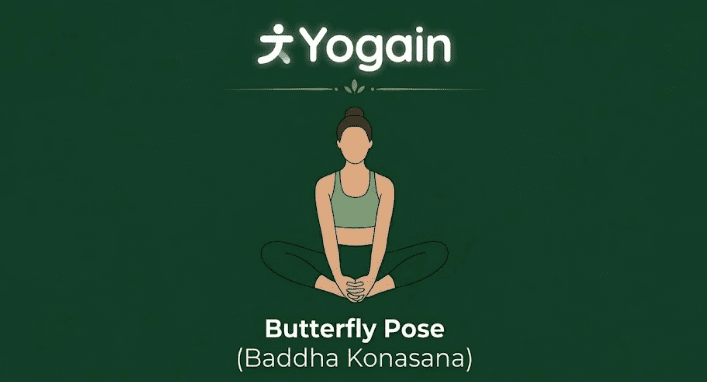
A gentle hip-opening pose that improves flexibility in the inner thighs. It is one of the most recommended poses for women’s reproductive health.
Why it helps:
Improves blood circulation to the pelvic area and supports ovarian function, which can help in managing hormonal imbalance.
How to do it:
- Sit with your spine straight
- Bring the soles of your feet together
- Hold your feet and gently move knees up and down
- Keep breathing slowly
2. Bridge Pose (Setu Bandhasana)
A beginner-friendly backbend that strengthens the lower body and opens the chest. It also activates important glands in the body.
Why it helps:
Stimulates the thyroid gland and improves hormone regulation, which is important for PCOS management.
How to do it:
- Lie on your back with knees bent
- Place feet flat on the floor
- Lift your hips upward slowly
- Keep shoulders grounded
3. Malasana (Garland Pose)
A deep squat position that improves lower body flexibility and strengthens the pelvic region. It also supports digestion.
Why it helps:
Activates the pelvic floor and improves blood flow to reproductive organs, helping in better hormonal balance.
How to do it:
- Stand with feet slightly apart
- Lower into a squat
- Keep your chest lifted
- Press elbows against knees
4. Cobra Pose (Bhujangasana)
A gentle backbend that stretches the abdomen and strengthens the spine. It helps reduce fatigue and tension.
Why it helps:
Stimulates abdominal organs and improves blood flow, which supports hormonal function and reduces stress.
How to do it:
- Lie on your stomach
- Place hands under shoulders
- Lift your chest upward slowly
- Keep elbows slightly bent
5. Cat-Cow Pose (Marjariasana)
A flowing movement between two poses that improves spinal flexibility. It also helps release tension in the body.
Why it helps:
Enhances blood circulation and reduces stress levels, which is important for managing PCOS symptoms.
How to do it:
- Start on hands and knees
- Inhale and arch your back
- Exhale and round your spine
- Repeat slowly
6. Child’s Pose (Balasana)
A resting pose that calms the body and mind. It gently stretches the lower back and hips.
Why it helps:
Reduces stress and cortisol levels, which play a major role in hormonal imbalance.
How to do it:
- Sit on your heels
- Bend forward
- Stretch your arms in front
- Relax and breathe deeply
7. Seated Forward Bend (Paschimottanasana)
A calming forward bend that stretches the entire back of the body. It also supports digestion and relaxation.
Why it helps:
Improves blood flow to the pelvic region and helps regulate hormonal activity.
How to do it:
- Sit with legs extended
- Bend forward slowly
- Reach for your toes
- Keep your back straight
8. Pigeon Pose
A deep hip-opening pose that releases stored tension in the lower body. It is especially helpful for tight hips.
Why it helps:
Improves flexibility in the pelvic area and supports reproductive health.
How to do it:
- Bring one leg forward bent
- Extend the other leg back
- Lower your body forward
- Keep hips aligned
9. Legs Up the Wall (Viparita Karani)
A relaxing inversion pose that improves blood circulation. It is ideal for stress relief and recovery.
Why it helps:
Calms the nervous system and reduces stress, which is crucial for hormonal balance in PCOS.
How to do it:
- Lie near a wall
- Lift your legs up against it
- Relax your arms by your side
- Breathe slowly
10. Supine Twist
A gentle twisting pose that relaxes the body and improves digestion. It also helps release tension from the spine.
Why it helps:
Supports detoxification and improves internal organ function, aiding hormonal balance.
How to do it:
- Lie on your back
- Bend one knee and twist it across your body
- Keep shoulders on the ground
- Hold and breathe
Yoga Poses for PCOS – Benefits & Duration
| Yoga Pose | Main Benefit | Recommended Duration |
|---|---|---|
| Butterfly Pose | Pelvic circulation | 1–2 min |
| Bridge Pose | Hormone support | 20–30 sec |
| Malasana | Reproductive health | 30–60 sec |
| Cobra Pose | Organ stimulation | 20 sec |
| Cat-Cow | Stress relief | 10–15 reps |
| Child’s Pose | Relaxation | 1–2 min |
| Forward Bend | Digestion | 30 sec |
| Pigeon Pose | Hip opening | 30–60 sec |
| Legs Up Wall | Stress relief | 2–5 min |
| Supine Twist | Detox support | 30 sec |
Can Other Forms of Exercise Help with PCOS?
While yoga is highly effective, it’s not the only way to manage PCOS symptoms. Combining yoga with other forms of moderate exercise can give even better results.
Regular physical activity helps improve overall health and plays a key role in managing PCOS naturally.
How Other Exercises Help:
- Improve Insulin Sensitivity
Many women with PCOS experience insulin resistance. Activities like walking, cycling, and jogging help your body use insulin more efficiently, which can reduce symptoms. - Support Weight Management
Consistent exercise helps burn calories and maintain a healthy weight, which is important for hormonal balance. - Reduce Risk of Health Issues
Regular movement lowers the risk of heart disease, diabetes, and stroke—conditions often linked with PCOS. - Boost Mood and Energy Levels
Exercise releases endorphins, which help reduce stress, anxiety, and fatigue.
How Much Exercise Do You Need?
Health experts recommend at least 150 minutes of moderate-intensity exercise per week.
You can break this into:
- 30 minutes a day, 5 days a week
Best Exercises for PCOS
You don’t need intense workouts. Simple, consistent movement works best:
- Walking → Easy and beginner-friendly
- Cycling → Improves heart health and stamina
- Jogging → Supports fat loss and metabolism
- Swimming → Full-body workout with low impact
- Dancing → Fun way to stay active
- Hiking → Great for both physical and mental health
The key is to choose activities you enjoy so you can stay consistent.
Best Approach for PCOS
For best results, combine:
- Yoga → for hormonal balance and stress relief
- Cardio → for weight and insulin management
This balanced approach gives long-term benefits.
Common Mistakes to Avoid in PCOS Yoga & Exercise
Even healthy habits can backfire if done incorrectly. Here are some common mistakes to avoid:
1. Being Inconsistent
Doing yoga or exercise occasionally won’t give results. PCOS management requires regular practice.
Aim for at least 4–5 days a week
2. Overexercising
Too much intense exercise can increase stress hormones (cortisol), which may worsen PCOS symptoms.
Focus on moderate and balanced workouts
3. Ignoring Recovery
Your body needs time to recover. Skipping rest can lead to fatigue and hormonal imbalance.
Include rest days and gentle yoga sessions
4. Not Focusing on Breathing in Yoga
Many people rush through poses without proper breathing.
Slow, deep breathing improves relaxation and hormonal benefits
5. Expecting Quick Results
PCOS is a long-term condition. Yoga and exercise take time to show results.
Stay patient and consistent for 6–12 weeks
6. Doing Advanced Poses Too Soon
Jumping into difficult yoga poses can lead to injury.
Start with beginner-friendly poses and progress gradually
Final Thoughts
Practicing the best yoga poses for PCOS regularly can help you manage symptoms naturally and improve your overall well-being. Start with simple poses, stay consistent, and focus on long-term improvement.
FAQs:
Which yoga is best for PCOS?
Butterfly Pose, Malasana, and Bridge Pose are among the best yoga poses for PCOS.
Can yoga cure PCOS permanently?
No, but it can help manage symptoms effectively over time.
How long does it take to see results?
With regular practice, results may be visible in 6–12 weeks.
Is yoga safe for beginners with PCOS?
Yes, beginner-friendly poses are safe and effective.